ChatGPT's Free Tier Just Got a Real Upgrade — Here's What's New
AI-generated image
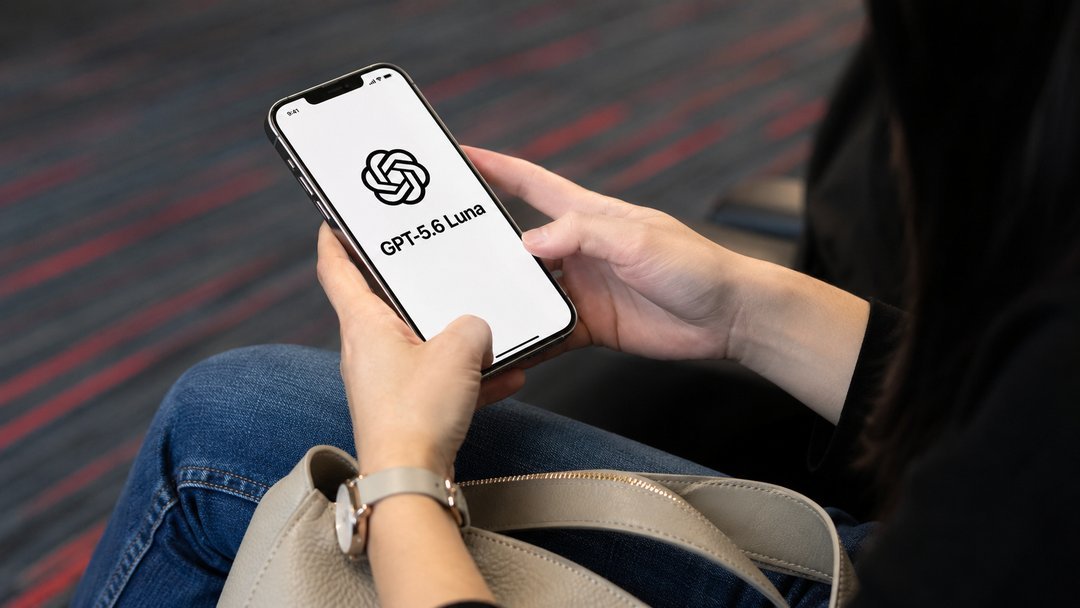
For years, "free ChatGPT" has meant a slightly older model with a message cap that kicks in right when a conversation gets useful. That changed this month. On August 6, 2026, OpenAI rolled out GPT-5.6 Luna as the new default model for Free and Go users — alongside unlimited text chats, no rate limit attached.
Here's what actually changed, and what still comes with a catch.
What's Actually New
The update splits into two tracks. Paid users (Plus and Pro) get an upgraded GPT-5.6 Sol, which now powers both quick replies and deeper reasoning in one model instead of switching between two different experiences. Free and Go users get GPT-5.6 Luna as their new default, replacing the older GPT-5.5 Instant model.
The headline change for free users is the removal of text-based rate limits entirely. Luna became the default model within the first week of August, and unlimited text chats followed shortly after, alongside a new "Think" button that gives Luna extra time to work through harder questions on a per-message basis.
The Catch: "Unlimited" Has Edges
Before anyone gets too excited, it's worth being precise about what's actually unlimited. The removal of limits applies specifically to text-based conversation. Image generation, file uploads, and other tools still carry the same restrictions free users had before — this update doesn't touch those. OpenAI has also said standard abuse guardrails still apply, so this isn't a completely unmetered free-for-all; it's specifically aimed at removing the friction of hitting a wall mid-conversation during normal text use.
Is It Actually More Accurate?
OpenAI's internal testing is the source here, not an independent lab, so treat the numbers as a company claim rather than a verified benchmark — but the figures are notable regardless. Across financial, medical, and legal prompts requiring factual precision, OpenAI reported that responses containing at least one factual error were roughly 62% less common with Luna, and roughly 68% less common with the paid-tier Sol model, compared to the outgoing GPT-5.5 Instant.
That's a meaningful claimed jump if it holds up under outside scrutiny, especially for a free-tier model — accuracy improvements on the free tier have historically lagged well behind what paid users get.
Why This Matters
ChatGPT serves more than 1 billion people every week, and the free tier is where the vast majority of that usage happens. Removing text rate limits and shipping a materially newer model to that tier — rather than keeping the newest models paywalled — is a notable shift in how OpenAI is positioning free access relative to competitors like Google's Gemini and Anthropic's Claude, both of which have also been expanding free-tier capability this year.
It's also a reminder that "free" AI tools in 2026 increasingly means "capable, with narrower limits" rather than "capped and clearly worse." The gap between free and paid tiers across the major AI chatbots keeps getting harder to describe in one sentence.
The Bottom Line
If you've been using ChatGPT's free tier and bumping into message limits mid-task, that specific pain point is now largely gone for text conversations. Images, file uploads, and other tools remain limited, and the newest reasoning-heavy features are still reserved for Plus and Pro. But for straightforward text-based use — questions, writing help, planning, research — free users are now working with a materially newer model and no message cap standing in the way.